Inside this article:
This practical guide helps AI PMs decide when multi-agent systems are worth it by focusing on clear agent responsibilities, reliable coordination patterns, and real production trade-offs.
Architecture fit: Know when MAS is a smart design choice vs. complexity for no reason.
Patterns that actually ship: Learn the specialist, supervisor/worker, and debate/verifier patterns teams use in real products.
Trust & control: Design permissions, escalation paths, and evals so agents can scale without breaking reliability.
For an AI product manager, the most dangerous assumption isn’t that AI will fail. It’s that one AI tool, one AI agent, one workflow should handle everything.
Multi-agent systems aren’t about adding more AI. They’re about designing intelligence that can specialize, disagree, recover, and scale, without collapsing under its own complexity.
This piece breaks down what multi-agent systems are, the patterns teams actually use, and how AI product managers can decide when they’re a smart architecture choice or an expensive mistake.
A CEO's Field Guide to AI Transformation
Research shows most AI transformations fail, but yours doesn’t have to. Learn from Product School’s own journey and apply the takeaways via a powerful framework for scaling AI across teams to boost efficiency, drive adoption, and maximize ROI.
Download Playbook
What Are Multi-Agent Systems (MAS) in AI?
Multi-agent systems (MAS) are AI architectures where multiple intelligent “agents” work together. They are collaborating, competing, or coordinating to solve problems.
Think of a MAS as a team of specialists rather than a single generalist. Each agent focuses on a niche task or expertise, and they share their findings toward a global goal.
This approach scales naturally. MAS shines on large, complex problems that can involve hundreds or thousands of agents cooperating.
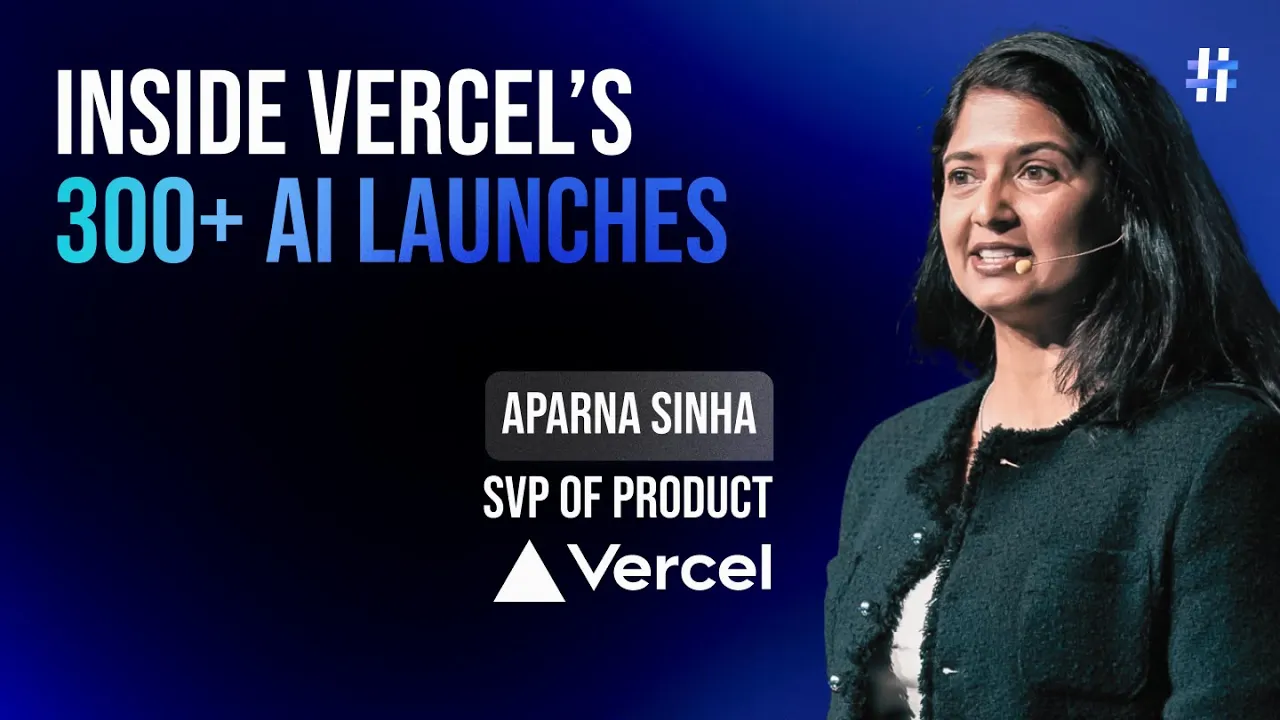
“We’ve moved from assistants to now agents, and we’re now moving to autonomous systems.”
— Aparna Sinha, SVP of Product at Vercel, at ProductCon
In practice, a MAS often resembles a human team. Some agents fetch data, others analyze it, and yet others plan next steps. This human-like orchestration is a hallmark of next-generation AI products.
Winning companies are rebuilding their workflows around AI, focusing on how humans collaborate with agents.” In other words, MAS gives organizations modular, resilient tools to automate complex workflows.
What Types of AI Agents Are There?
Before getting fancy with multi-agent systems, it helps to get crisp on a simpler question: what kind of agent are you actually building?
Murtaza Chowdhury, AI Product Leader at AWS, teaches Agentic AI & Autonomous Agents with a useful framing:
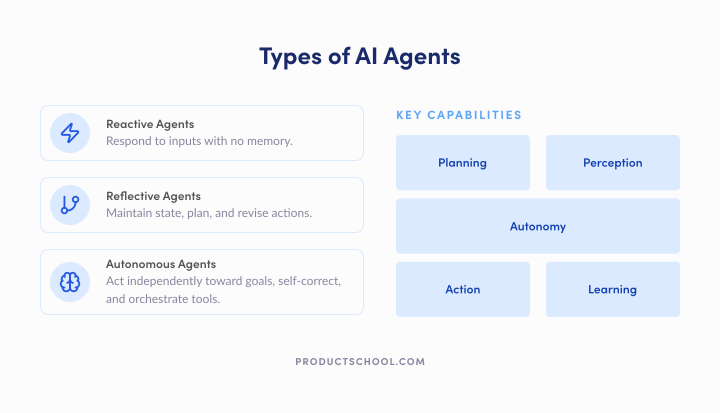
Agents aren’t one thing. They sit on a spectrum of capability. If a team skips this step, the “multi-agent” design tends to paper over a weak core agent with more agents, more prompts, and more orchestration.
Understanding the types below makes multi-agent decisions practical. It tells product teams what to split across agents, what to centralize, where to put guardrails, and what “done” should look like.
Reactive AI agents
Reactive agents respond to inputs with no real memory or persistent state. Once you build these AI agents, they can still feel smart, but they’re basically doing fast pattern-matching and single-turn execution.
In a multi-agent system, reactive agents work best as small utilities: classify, extract, route, or run one tool call. But if a workflow takes multiple steps, reactive agents can’t carry context across those steps.
That means the orchestrator has to track everything (progress, tool outputs, and what happens next) which quickly makes the system harder to manage.
Reflective AI agents
Reflective agents maintain state (they remember and carry forward relevant context from earlier steps in the task), plan steps, and revise actions based on intermediate results. They’re the ones that can pause, evaluate their output, and correct course without manually rewriting every rule (hardcoding every branch).
In a multi-agent system, reflective agents are often your “brains” for subproblems: research, synthesis, critique, or decision support. They reduce orchestration burden because each agent can manage its own mini-loop rather than pushing every correction up to a supervisor.
Autonomous agents
Autonomous agents act independently toward goals, self-correct, and orchestrate tools over longer horizons. They’re closer to “ownership” than “assistance”: they can keep going, recover from errors, and finish a job with minimal hand-holding.
In a multi-agent system, autonomous agents change the product surface area. Meaning, they expand what the product can do, and increase the number of ways it can succeed or fail in real user workflows. You’re now coordinating responsibilities. That’s where you need clearer boundaries, permissions, observability, and stop conditions, because each autonomous agent can generate real downstream impact.
Common Multi-Agent AI Patterns
Different MAS designs fit different problems. The trick is choosing a pattern that matches the shape of the work, instead of forcing every workflow into multiple agents just because it sounds modern.
1. Specialist (parallel) AI agents
Specialist agents work like a pit crew. You give multiple agents the same goal, each one attacks it from a different angle, and then you merge the best parts into one output.
In practice, this usually looks like a lightweight coordinator handing out the prompt, then a final “merge” step that resolves conflicts and picks the answer you actually ship.
This pattern is the best fit when the work can be done in parallel, and you want diversity of thinking or broader coverage fast. It’s also a clean way to reduce risk: if one agent misses something, another often catches it.
Use it when: coverage matters, speed matters, and tasks can run independently
Watch out for: messy merging, contradictions, and “three mediocre answers” instead of one great one
Here’s a good example: a fintech product runs three parallel agents in a company. One does fundamentals, one reads market sentiment, and one flags risk and compliance signals. The coordinator merges them into a single brief that an AI PM or product analyst can trust without reading three separate outputs.
2. Supervisor/worker (orchestrator) LLM models
Supervisor/worker systems look like a real product team structure. A supervisor agent receives the goal, breaks it into steps, assigns work to worker agents, and then stitches the result back together. As workers report back, the supervisor updates the plan and decides what happens next.
This pattern fits workflows where order matters, where one step changes what you should do next, or where routing is part of the product (send the task to the right “department”). It’s also the pattern most AI-native teams reach for when they want a product that feels like it can run a process end-to-end.
Use it when: tasks are sequential, interdependent, or need smart routing
Watch out for: a bloated supervisor prompt, slow chains, and fragile handoffs
Here’s what it looks like in practice: A support agentic workflow starts with a supervisor who classifies the issue, pulls the customer context, and then assigns the case to a billing agent or a technical debugging agent. The supervisor then composes the final response and decides whether a human escalation is needed.
3. Debate and verification agents
Debate and verification systems bake quality control into the architecture. One agent proposes, another critiques, and another verifies; the system uses that tension to improve the final answer. Sometimes this is an explicit “debate,” other times it’s a quiet checker loop that runs in the background before the user sees anything.
This pattern is a great fit when quality is more important than speed, or when the cost of being wrong is high. It’s also useful when your product needs to be consistent (same question, same standard) across many users and contexts.
Use it when: accuracy, safety, or consistency is non-negotiable
Watch out for: extra latency, higher cost, and “argument loops” without a stop rule
For example, a legal or compliance summarization tool uses one AI agent to draft a summary, a second agent to check for missing clauses and risky phrasing, and a third agent to verify citations against the source text. Only then does the system produce the final output.
Each pattern solves a different coordination problem. In real products, the best systems often mix them (parallel specialists for breadth, a supervisor for sequencing, and a verifier for trust) because that mirrors how high-performing teams actually work.
Why Teams Use Multi-Agent LLM Systems
Teams reach for multi-agent systems when one agent starts doing too many jobs at once. If the work has distinct “modes” (retrieve, reason, decide, execute, verify), splitting responsibilities can make the system more predictable and easier to evolve.
Specialization and modularity: Each AI agent owns a narrow responsibility with clear inputs and outputs, which reduces prompt sprawl and makes failures easier to diagnose. It also lets teams swap or upgrade one capability (like retrieval, planning, or policy checks) without rewriting the entire system.
Scalability in throughput, not just features: MAS scales by running work in parallel or distributing load across agents. That matters when volume spikes (support tickets, lead qualification, code review queues) or when one user request triggers many sub-requests that can be handled simultaneously.
Reliability through cross-checks and fallbacks: Multiple agents let product teams build in redundancy: a verifier agent can catch obvious errors, a second “opinion” agent can reduce brittle hallucinations, and a fallback agent can take over when a tool call fails. The product becomes less dependent on a single chain of reasoning being perfect.
Complex workflow automation: MAS is useful when a workflow requires coordination across tools, systems, and decisions over multiple steps. This is where the system starts feeling like an operator, not a chatbot—one agent plans, others execute, and another confirms the result matches the goal.
When to Use vs. Avoid Multi-Agent Systems
Despite their appeal, MAS are not always the right choice. Here are guidelines for product managers:
When MAS is the right choice
Tasks naturally decompose: If your problem cleanly splits into independent parts (e.g., information retrieval + summarization + action planning), MAS fit well. No single agent can easily cover all parts at once, so splitting the work yields better results.
High volume or concurrency needs: When you need to process many items in parallel, MAS shines. For instance, an e-commerce platform handling thousands of customer requests can distribute them across agents, improving throughput.
Critical reliability or validation: In domains where mistakes are costly (finance, healthcare, law), MAS allow built-in checks. Agents can double-check each other’s work automatically. If human-level auditing is expensive, letting agents audit each other can be a force multiplier.
Diverse expertise needed: If your product spans multiple knowledge areas, MAS can help. For example, a single chatbot trying to be an expert in law, medical advice, and education would struggle. But a team of agents (each trained in one field) can excel and combine their output smoothly.
When MAS is overkill
Simple or small-scale tasks: If the workflow is straightforward or mostly linear, a single well-prompted agent might do fine. Spinning up a MAS can just add bureaucracy. For example, answering a single-API query or doing basic classification rarely needs multiple agents.
Proof-of-concept / early stage: At the start of a product, focus on core value. Building a MAS takes more engineering. Most people don’t need multi-agent systems early on, as MAS can add complexity without clear benefits.
Latency-sensitive use cases: Every additional agent call adds delay. Estimates show each agent handoff can cost ~100–500ms; chaining 5 agents might add over 2 seconds. If users expect instant feedback (e.g., real-time chat), MAS may slow things down unacceptably.
Limited resources: Running and monitoring many agents is costlier. For example, one analysis found that a customer support workflow costs $0.05 on a single agent but $0.40 with a 5-agent MAS. If your budget or compute is tight, weigh whether the extra output quality justifies the multiplied cost.
Trade-offs of Multi-Agent Systems
Even when MAS are justified, be ready for some trade-offs:
Complexity: MAS adds architectural complexity. You must design coordination logic, task routing, and recovery from agent failures. Debugging is harder: as one analysis puts it, diagnosing bugs across multiple agents is “exponentially harder” than in a single agent.
Cost: More agents mean more model calls and infrastructure. In practice, MAS can multiply API or GPU costs. Coordination overhead is real: Galileo.ai notes an example where a task costs $0.10 with one agent but $1.50 with many agents. Expect at least 2–3× cost increase even if throughput improves.
Observability: With MAS, you must monitor each agent and their interactions. Lacking this, you’re “flying blind” if something breaks. Instrument all agent calls, handoffs, and data flows. Build dashboards and logs per agent so you can trace end-to-end workflows.
Latency: As mentioned, chaining agents adds delay. If you use MAS, invest in parallel processing where possible and set user expectations. For time-critical tasks, MAS may not be suitable.
Unpredictability: More moving parts mean more emergent behavior. Independent agents can drift or conflict in unexpected ways. IBM warns MAS can exhibit “unpredictable behavior” that’s tricky to manage. Long-term planning becomes harder.
Resource constraints: Agents might contend for limited resources (e.g. API rate limits, context window space). Plan for throttling and graceful failure modes.
In practice, it’s wise to start simple. Build a robust single-agent AI prototype first, then introduce a second agent if you truly need it. The most effective AI products don’t just use the newest trick; they match the solution to the problem.
Meaning, adopting an “agentic” mindset can start with a small UX change, but building a full MAS requires serious design. Use agents where they add real value, not just for novelty.
From Single Agent to Multi-Agent: Shipping MAS Without Chaos
Multi-agent systems aren’t “extra AI.” They’re an operational decision. You’re running a small team of decision-makers inside your product, under real constraints, with real consequences.
The job of an AI product manager is to turn “it works in the demo” into “we can trust it in production.” That means turning a clever architecture into something that can survive tools failing, edge cases piling up, and agents disagreeing.
Before you ship, do one last pass through the essentials:
Agent roles are crystal clear. Each agent has one job, explicit inputs/outputs, and a defined handoff contract, not “everyone does everything.”
Orchestration survives real-world mess. Your supervisor/router doesn’t collapse under retries, partial results, missing data, or tool timeouts.
Guardrails live at the action layer. Tools have scoped permissions, risky steps require approval, and loops have circuit breakers with hard stop rules.
Evals cover both agents and the full system. You’re not only testing “did the answer sound good,” but “did the workflow do the right thing end-to-end.”
Fallbacks are built for recovery, not vibes. When an agent fails, the system escalates cleanly, retries safely, or degrades gracefully — without leaving broken states behind.
Observability exists across the whole agent graph. You can trace decisions, handoffs, tool calls, failure points, latency, and cost per agent — not just the final output.
Latency and cost budgets are enforced. You’ve defined what’s acceptable, and the system can shed work, reduce depth, or switch modes when budgets are exceeded.
A smart final move is rollout in controlled stages. Start with a small slice of traffic, watch agent-level metrics, then expand only if the system stays inside spec.
If you do this well, you don’t just ship a multi-agent system. You ship trust and keep it.
Level up on your AI knowledge
Based on insights from top Product Leaders from companies like Google, Grammarly, and Shopify, this guide ensures seamless AI adoption for sustainable growth.
Download Guide
Updated: February 16, 2026