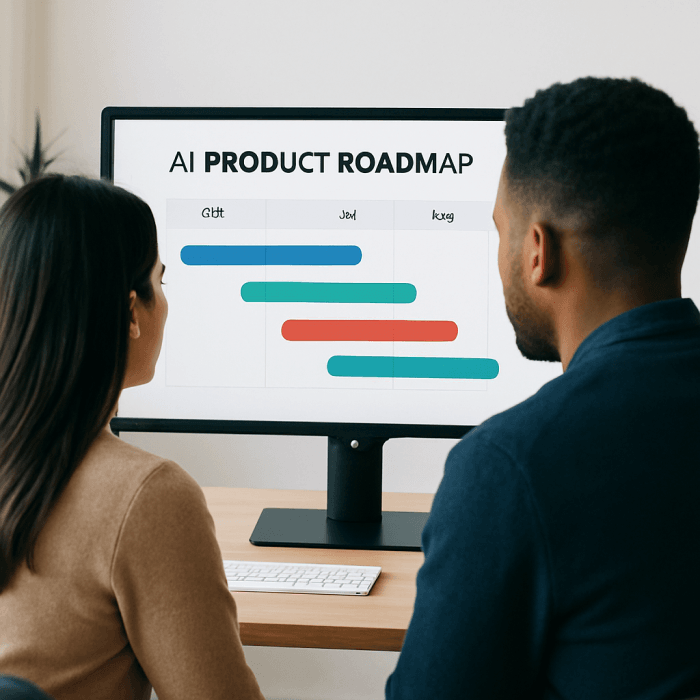
Most product roadmaps tell the story of what we think will matter next quarter. AI roadmaps? They aim to tell the story of what’s most likely to matter.
The shift is powerful. Product teams can now use AI to spot emerging user needs, forecast impact, and prioritize based on real signals. The result is a roadmap that’s less about opinions and more about outcomes ( done in a day, rather than a full iteration).
In this guide, we’ll break down how AI is reshaping roadmap creation and prioritization. We’ll explore the tools helping AI product managers turn all that intelligence into direction.
AI PRD Template
Plan, strategize, and align stakeholders around the key requirements unique to AI products.
By sharing your email, you agree to our Privacy Policy and Terms of Service
How AI is Transforming Roadmap Prioritization
Product managers today face overflowing backlogs and competing stakeholder opinions on what to build next.
In fact, 61% of product managers are already using AI or machine learning in their work to help tackle these challenges (1). What’s more, companies adopting AI have seen product development efficiency jump by 25-30%, according to Bain and Company (2).
The message is clear: AI is highly effective in delivering results.
The Rise of AI in Product Roadmapping
AI is a response to a long-standing problem in product management: too much information, too little clarity.
Product teams have always been under pressure to prioritize, but traditional roadmapping methods often rely on instinct, anecdotal feedback, and the influence of the loudest stakeholder. The result is roadmaps that look busy but lack focus.
AI tools give product teams a way to make sense of overwhelming data and identify what truly matters. Instead of debating which idea feels most important, teams have an opportunity to make decisions more grounded in evidence (faster than before).
AI can scan thousands of customer comments, survey responses, or usage patterns in minutes and highlight the common pain points or emerging opportunities that would take humans weeks to uncover. The difference is about elevating judgment and productivity.
Here’s how AI is reshaping roadmapping today:
It replaces gut feeling with data clarity: AI can analyze product usage, customer sentiment, and feedback loops to show which initiatives actually move the needle on user retention, satisfaction, or revenue growth strategy.
It cuts the manual work: Tools now automate repetitive tasks like sorting feedback, cleaning data, or updating status reports. This frees PMs to focus on AI product strategy and alignment.
It scales insight: Machine learning models can track behavioral shifts across millions of data points, spotting opportunities or risks long before they’re visible in metrics.
It increases decision confidence: By showing how feature priorities align with past outcomes or predicted ROI, AI helps teams defend their decisions with real data.
Balancing AI and human judgment in an AI-driven roadmap
According to multiple rigorous studies, integrating AI into development workflows has led to ~20–30% improvements in product developer throughput and reductions in review cycle time. For example, one enterprise study observed a 31.8% decrease in PR review time and ~28% jump in code shipped.
Other than being operational, the speed gain is strategic. Teams move from reactive planning to proactive, data-driven execution.
But here’s the part many overlook: AI can’t tell you what to build. It can only tell you what’s likely to matter most based on your inputs. Being “AI-driven” doesn’t mean letting algorithms decide your future (which is why AI will never replace software engineers or product managers. It means combining data precision with human intuition (the why behind every decision).
To get that balance right:
Anchor your roadmap in product vision. Start with a clear product mission, market understanding, and success metrics before involving AI. Without a defined goal, AI will only optimize noise.
Feed it the right context. AI works best when guided by the AI product strategy you’ve already shaped. Think customer segments, value drivers, constraints, and milestones.
Use AI agents or AI tools as a partner, not a pilot. Let it handle the volume (data crunching, product prioritization) while you handle the nuance (vision, storytelling, stakeholder analysis).
As VP of Product at Duolingo, Cem Kansu, puts it on The Product Podcast:
With generative AI and GPTs, it's just been much more powerful, much smarter, and much faster.
That’s the essence of an AI-driven roadmap. It’s not automation for its own sake, but augmentation for better decisions and faster results.
How AI Transforms Roadmap Prioritization
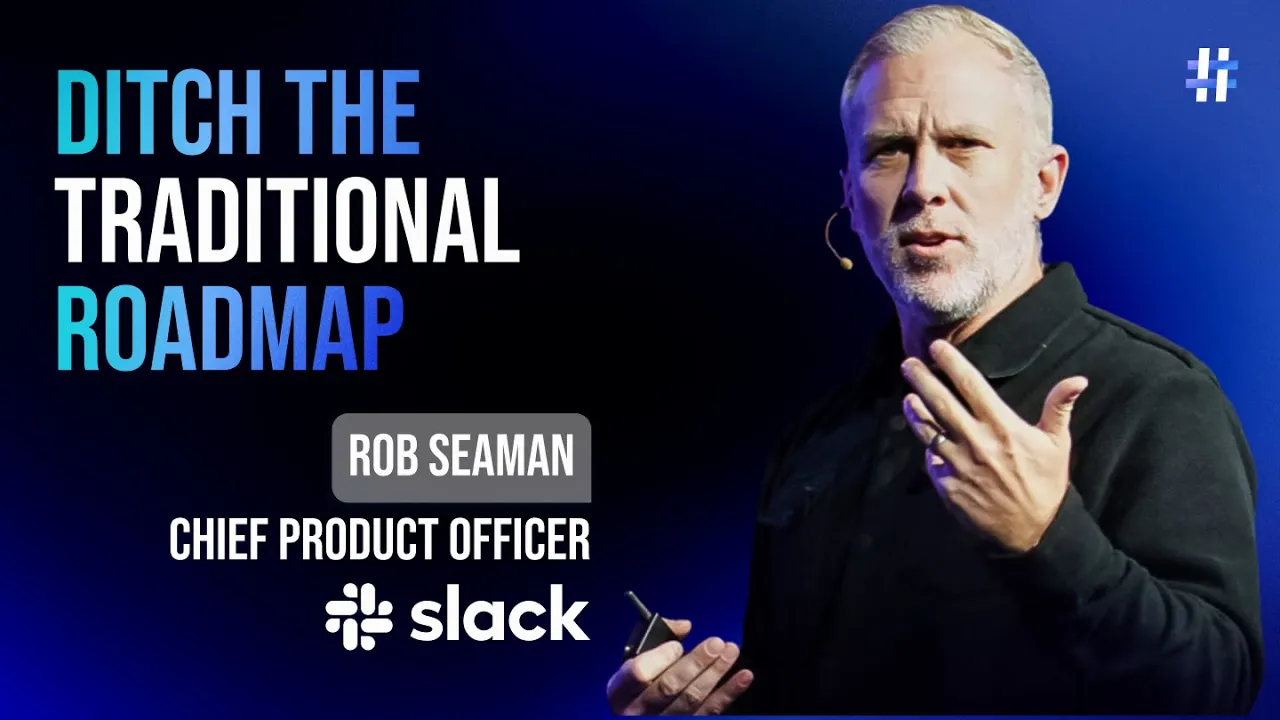
What we need to be doing is planning for outcomes. Treat your plans as a series of hypotheses you’re going to test—through rapid prototyping.
— Rob Seaman, CPO at Slack at ProductCon San Francisco 2025
AI is changing how product teams prioritize roadmap items by introducing objectivity, scale, and predictive power into the process. Here are a few ways AI improves the prioritization process:
1. Objective feature scoring in AI product roadmap prioritization
One of the biggest shifts AI brings to product roadmapping is objectivity. Instead of relying on intuition or politics, AI can evaluate features using data-driven criteria that stay consistent across the board. These are things like customer need, projected business impact, development effort, and resource constraints.
In practice, this means AI tools boosted with a RAG system can weigh features based on patterns in historical data: how similar features performed, which user segments engaged most, or how certain updates affected user retention or revenue. The result: roadmaps that reflect measurable value, not opinion.
At a high level, here’s what objective AI feature scoring enables:
Product prioritization without bias. AI evaluates every initiative against the same parameters, removing the influence of internal politics or the loudest stakeholder voice.
Dynamic scoring. Instead of a static, one-time scorecard, AI can adjust priorities in real time as new data arrives — think of it as a living prioritization model.
Predictive clarity. Machine learning models can forecast which roadmap items are most likely to move key metrics like NPS, activation rate, or ARR before you build them.
Faster alignment. When decisions are backed by explainable data (for example, “Feature X is projected to increase retention by 6% in Segment B”), teams can align faster and defend their roadmap choices with confidence.
The best part is scalability. What once required hours of manual scoring and stakeholder alignment can now be automated and recalibrated weekly. The product manager’s role shifts from spreadsheet analyst to strategic editor. They decide what stays, what goes, and what deserves a second look.
2. Pattern recognition in AI product roadmap prioritization
AI excels at identifying connections humans often miss. Product teams collect data from many sources, such as user feedback, surveys, reviews, and product analytics, but most of it stays fragmented. Pattern recognition brings it all together.
By clustering related insights and finding recurring themes, AI helps teams understand what customers really need instead of just what they say. It can group thousands of feedback points into a few clear problems to solve, revealing priorities that might never surface in manual analysis.
Here’s what pattern recognition adds to roadmap planning:
Clarity from chaos. AI organizes scattered customer input into structured insights and shows which problems affect the most users.
Early detection. It identifies emerging trends or behavior changes before they appear in standard dashboards.
Deeper context. Instead of isolated metrics, you get a broader view of how issues connect across channels or segments.
Smarter focus. You can invest in features that solve multiple underlying problems rather than isolated requests.
For AI product managers, this means fewer blind spots and faster alignment on what truly matters. Pattern recognition helps ensure your roadmap reflects both current realities and upcoming shifts in customer behavior.
3. Predictive analytics for impact
Predictive analytics allows product teams to move from reacting to data toward anticipating it. Instead of waiting for adoption metrics after launch, AI can estimate how a planned feature will perform before a single line of code is written.
By learning from historical data, usage trends, and customer behavior patterns, predictive models can estimate potential outcomes such as retention impact, product adoption, or revenue contribution. This helps product managers make smarter trade-offs when deciding what to build next.
Here’s what predictive analytics adds to roadmap prioritization:
Forward-looking insight. AI can forecast the likely performance of each roadmap item based on comparable launches and user behavior.
Better resource allocation. Teams can focus engineering time on initiatives with the strongest predicted return.
Reduced uncertainty. Predictive models provide probability ranges rather than assumptions, helping PMs defend their choices with numbers.
Continuous learning. Each launch feeds new data back into the model, improving the accuracy of future predictions.
Predictive analytics doesn’t replace the need for judgment or experimentation. It simply gives product managers a clearer picture of where their bets are most likely to pay off, turning roadmap planning into a cycle of informed iteration rather than educated guessing.
4. Natural language processing in AI product roadmap prioritization
Natural language processing (NLP) helps product teams and data product managers make sense of the unstructured data hidden in customer conversations, reviews, and support tickets. Instead of manually reading through hundreds of comments, AI can summarize what users are saying, measure sentiment, and reveal which topics come up most often.
This transforms messy qualitative input into structured, usable insight that directly feeds into roadmap priorities. It gives teams a more accurate view of customer pain points without the time drain of manual product analysis.
Here’s what NLP contributes to roadmap prioritization:
Understanding at scale. AI can analyze thousands of pieces of feedback and highlight recurring themes in minutes.
Sentiment awareness. It detects whether users express frustration, confusion, or delight, helping teams understand emotional drivers behind requests.
Actionable insights. Feedback can be automatically categorized into areas like bugs, feature requests, or usability issues.
Faster decision cycles. PMs can identify the most pressing topics without waiting for quarterly feedback summaries.
With NLP, product teams finally have a way to turn customer voices into clear priorities. The qualitative becomes quantifiable, and roadmap discussions become grounded in what users consistently express rather than isolated anecdotes.
AI Tools for Product Roadmap Planning
Modern product management tools (especially Proddy-awarded tools) are increasingly embedding AI features to assist with roadmap planning. You don’t have to build everything from scratch. There’s a growing ecosystem of AI-powered tools that can help at various stages of your roadmapping process.
An AI-powered product management interface highlighting automated suggestions, such as extracting information or prioritizing tasks within a project. Integrated AI features like these assist product teams by surfacing insights and recommendations directly in their workflow.
Here are a few categories of AI tools and examples of how they support roadmap prioritization:
Feedback analysis tools in AI product roadmap prioritization
One of the richest sources of roadmap insight comes from customer feedback, yet it’s also one of the hardest to manage. Between reviews, surveys, and support tickets, teams often drown in qualitative data without a clear way to extract what matters most.
AI-powered feedback analysis tools now make this process fast and scalable. They automatically collect, categorize, and synthesize customer input so product teams can quickly identify trends, pain points, and feature requests that truly deserve attention.
Here’s what these tools bring to roadmap prioritization:
Automatic organization. Tools like Userpilot and Zeda.io use AI to tag and cluster feedback from multiple channels, revealing top-requested features and recurring issues.
Signal over noise. They highlight patterns that appear consistently across different data sources, ensuring roadmap priorities reflect real customer demand rather than isolated feedback.
Instant visibility. PMs can log in and immediately see which themes dominate customer sentiment, saving hours of manual data review.
Customer-centric focus. Because insights come directly from aggregated user input, the resulting roadmap aligns more closely with what customers value most.
By turning unstructured comments into clear, prioritized insights, AI feedback analysis tools give AI product managers a live pulse on user needs. The process becomes less about interpretation and more about informed decision-making.
AI tools for feature prioritization
Once feedback and data are organized, the next challenge is deciding what actually makes it onto the feature roadmap. This is where AI-powered prioritization platforms help. They analyze multiple factors (user value, strategic fit, effort, and potential ROI) to score and rank initiatives with a level of consistency that manual methods can’t match.
These tools act like decision copilots. They don’t replace human judgment but give teams a transparent framework for comparing ideas objectively and aligning on what drives the most impact.
Here’s how AI-driven prioritization tools add value:
Evidence-based scoring. Platforms like Airfocus and ProdPad use AI to calculate priority scores that balance impact and effort for every proposed initiative.
Integrated insights. Productboard connects feedback, company objectives, and user data to help PMs see how each idea contributes to the bigger picture.
Scenario testing. Teams can adjust inputs like estimated effort or business value to instantly see how rankings shift, supporting faster trade-off discussions.
Alignment made simple. Clear scoring models reduce debate and help teams communicate why certain features rise to the top.
AI prioritization tools make the process both smarter and faster. Instead of long debates and static spreadsheets, product teams can make data-informed decisions in hours, while keeping product strategy, customer value, and feasibility in balance.
Product analytics integrations
Usage data tells a different story than customer feedback. It shows what people actually do inside your product. When connected with AI, that story becomes sharper and faster to interpret.
Modern analytics platforms such as Mixpanel and Amplitude now include built-in AI capabilities that detect meaningful behavioral patterns automatically. They can surface insights that might take a product analyst days to uncover, such as where users drop off during user onboarding or which features power users engage with most often.
Here’s how product analytics integrations enhance decision-making:
Behavior-driven prioritization. AI highlights friction points or high-value behaviors, helping teams choose initiatives that directly improve engagement or conversion.
Cohort insights. It identifies groups of users with similar actions or needs, revealing where specific features might have the greatest business impact.
Automated anomaly detection. Teams get alerts when usage patterns change, allowing for quick response to emerging issues or opportunities.
Unified visibility. Integrating analytics tools with roadmap platforms ensures decisions consider both what customers say and what they actually do.
These integrations bridge the gap between qualitative and quantitative data. Instead of relying solely on surveys or intuition, product managers can prioritize features backed by real behavioral evidence, creating roadmaps grounded in how users truly experience the product.
AI copilots for product managers
A new generation of AI copilots is emerging to support every stage of product work, from roadmap planning to sprint execution. These intelligent assistants interpret natural language, generate documentation, and connect data from multiple tools, allowing PMs to focus on product strategy instead of the product owner’s line of work.
AI copilots act as personal analysts, research partners, and task managers rolled into one. They help product teams move faster while keeping context and alignment intact.
Here’s how AI copilots are changing product management workflows:
Faster planning. Tools like Recraft and Revo.pm can draft product briefs, summarize meetings, or create timeline visuals from simple text prompts.
Conversational analysis. Some copilots let PMs query product data directly (asking questions like “What themes dominated feedback last quarter?”) and get instant, summarized insights.
Context-aware assistance. Integrated copilots can connect feedback, tickets, and analytics so PMs see how decisions ripple across the roadmap.
Focus on high-value work. With product documentation, analysis, and updates handled by AI, product leaders can spend more time aligning teams and refining strategy.
These copilots make decisions easier. By handling the repetitive parts of planning and coordination, they allow AI PMs to concentrate on what matters most: defining the right problems and guiding teams toward meaningful outcomes.
AI agents and RAG systems in roadmap intelligence
AI agents and RAG (Retrieval-Augmented Generation) systems are becoming the next evolution of AI-driven product management. Unlike standalone copilots, these systems can autonomously perform tasks, gather data from multiple sources, and generate insights with context awareness that matches how product teams actually work.
AI agents can connect to tools like Jira, Slack, and analytics platforms to automate end-to-end workflows. They can summarize meetings, pull usage data, prioritize tickets, and even draft feature briefs based on real-time information. Instead of switching between dashboards, AI PMs or technical PMs can rely on a single intelligent agent that manages updates across the entire outcome-based roadmap.
RAG systems make these agents significantly more reliable. By retrieving relevant internal data (such as research documents, customer feedback, or roadmap archives) before generating responses, they ensure outputs stay grounded in the company context. This helps avoid the “hallucinations” that limit traditional large language models and keeps recommendations accurate and verifiable.
Here’s how AI agents and RAG systems for product managers enhance roadmap decision-making:
Context-rich recommendations. RAG enables AI to base suggestions on actual company data, not general internet knowledge.
Continuous learning. Agents improve as they interact with your ecosystem, refining prioritization logic with every feedback loop.
Cross-tool automation. They can sync backlog updates, meeting notes, and analytics in real time, reducing manual coordination.
Strategic recall. RAG systems let AI access historical data to identify patterns, lessons, or outcomes from past launches.
Together, AI agents and RAG systems are redefining what an intelligent feature roadmap or Agile roadmap looks like. They help product teams move from reactive updates to continuous, context-aware prioritization (powered by data, guided by human strategy).
7 Best Practices for AI-Driven Roadmap Planning
Adopting AI in roadmap prioritization isn’t as simple as flipping a switch. To truly get value (and avoid pitfalls), keep these best practices in mind.
1. Ensure data quality and diversity
AI is only as good as the data it learns from. If the inputs are incomplete or biased, the outputs will be too. Product teams often rely on feedback from the most vocal users, which skews priorities and limits product discovery. The goal is to give AI a balanced, representative view of your product reality.
Here’s how to strengthen your data foundation:
Collect input from multiple channels such as support tickets, analytics, and survey responses to avoid sampling bias.
Clean and standardize the data so models can find consistent patterns instead of noise.
Regularly review which data sources dominate and whether they fairly represent your user base.
High-quality, diverse data ensures AI prioritization reflects what customers actually need rather than who shouts the loudest.
2. Treat AI as an assistant, not a replacement
AI can analyze faster than any human, but it still lacks the context, empathy, and creativity that define good product decisions. Think of it as a highly capable analyst rather than a decision-maker.
Here’s how to get the balance right:
Use AI tools to surface insights, then apply human judgment to validate them.
Review AI-generated recommendations before committing to roadmap changes.
Encourage PMs to interpret, not just accept, AI outputs and share reasoning with stakeholders.
Keeping a human in the feedback loop ensures your roadmap benefits from both computational power and strategic understanding.
3. Be transparent and get buy-in
Bringing AI into roadmap planning changes how decisions are made, and that can create resistance. Transparency builds trust and product adoption.
Here’s how to make AI-driven prioritization easier for everyone to embrace:
Explain how AI recommendations are formed and which data sources are used.
Share the logic behind key decisions (for example, “This feature ranks highest because 40% of enterprise users requested it”).
Involve stakeholders early with pilot projects so they can see the value firsthand.
When people understand the “why” behind AI recommendations, they’re more likely to support and contribute to the process.
4. Start small and demonstrate value
Rolling out AI across an entire product-led organization rarely works from day one. Start with a narrow AI use case that delivers quick, visible wins.
Here’s how to scale responsibly:
Begin with one product area or a specific task like feedback clustering or backlog scoring.
Measure tangible outcomes such as time saved, new insights discovered, or increased alignment.
Share results widely to build internal momentum and justify deeper investment.
Gradual adoption helps teams build confidence while learning how to get the most out of their AI tools.
5. Mind the ethical and bias considerations
Even the best AI systems can inherit the biases in their data or design. If left unchecked, this can skew priorities and harm user trust. Responsible AI starts with awareness.
Here’s how to keep ethics at the center of your roadmap planning:
Audit AI recommendations periodically for fairness and representation.
Set clear policies for when human override is required.
Diversify feedback and data sources to minimize bias in your models.
Ethical oversight ensures that AI-driven roadmaps create value without compromising inclusivity or integrity.
6. Tie AI work to clear outcomes and metrics
AI should serve product goals, not the other way around. Define how AI will improve your roadmap quality or speed, then track it like any other initiative.
Here’s how to anchor AI to results:
Map each AI use case to specific OKRs such as activation rate, user retention, or time to value.
Set leading indicators like time saved on feedback synthesis or cycle time to prioritize.
Review outcomes after each release and update the scoring model based on what actually moved the metric.
7. Build lightweight governance for your AI product roadmap
As AI use grows, you need simple rules that keep quality high without slowing teams down. Governance clarifies how models are used, reviewed, and improved over time.
Here’s how to keep it practical:
Define who owns model inputs, review cadence, and approval for roadmap-impacting changes.
Keep a changelog of scoring logic, data sources, and key assumptions for auditability.
Establish a feedback loop so PMs can flag bad recommendations and retrain or adjust quickly.
Embracing AI for Smarter Roadmaps
AI is transforming how product roadmaps are built and prioritized. It’s enabling product managers to make more informed decisions than ever. When used correctly, AI can eliminate a lot of the guesswork and grunt work, allowing you to focus on crafting strategy and delivering value.
It’s like having a tireless analyst by your side, pointing you to what matters most. That said, the human element remains paramount.
The best outcomes occur when AI and human product expertise work in tandem. With a clear vision, quality data, and a thoughtful implementation, AI-driven roadmapping can lead to faster releases, happier teams, and products that more closely align with customer needs.
Product Roadmapping Micro-Certification (PRC)™️
Product School has partnered with Productboard to create a micro-certification on how to build and maintain effective Roadmaps. Enroll for free to learn how to communicate the product vision and strategy to your stakeholders and customers.
Enroll for Free
(1): https://www.mindtheproduct.com/product-survey-findings-only-15-of-users-are-embracing-ai-features/
(2): https://www.bain.com/insights/from-pilots-to-payoff-generative-ai-in-software-development-technology-report-2025/
Updated: December 1, 2025