Most product teams are awash in data, dashboards, and AI models (yet still guessing what customers want). The difference between teams that guess and teams that know isn’t any one metric. It is the quality of their customer feedback.
McKinsey found that organizations that leverage customer behavioral insights outperform peers by 85% in sales growth and more than 25% in gross margin (1). In product management, that edge comes from a disciplined product feedback process that turns raw product comments into clear decisions.
This article walks through how to get product feedback that matters, how to gather customer feedback even before you have users, and how to use AI tools to scale collection and analysis without outsourcing your judgment. If you care about building an AI-era product that compounds value over time, your feedback for product decisions is where that compounding starts.
Download our Customer Journey Template
Use this template to create a visual representation of the steps a user takes while using your product and interacting with your company.
Download here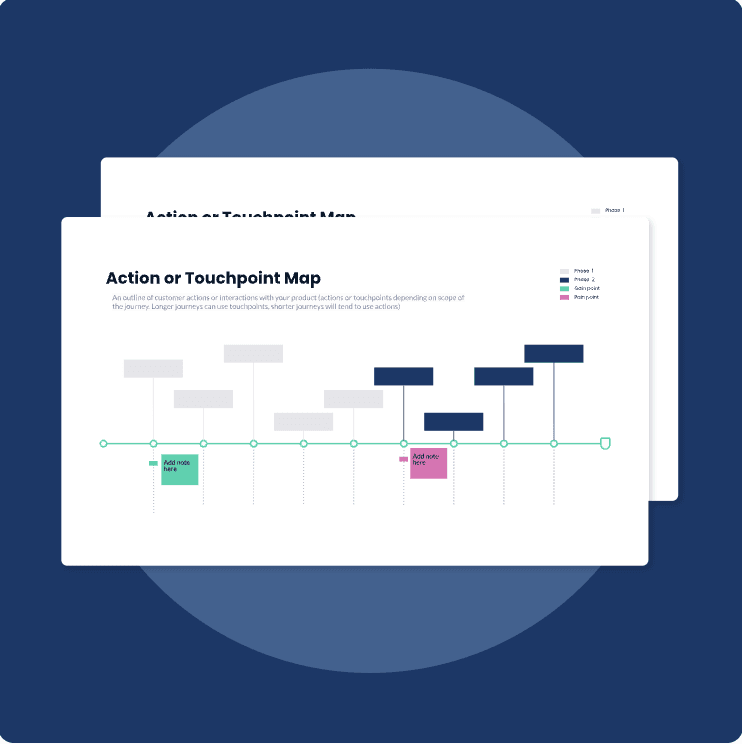
Why Customer Feedback Is Important in Product Management
Listening to the “voice of the customer” is more than a courtesy. Customer feedback encompasses the evaluations, reactions, and comments users share about their experience with your product. Here’s why it’s so critical:
Validating product direction: Even with a clear product vision, teams need to validate assumptions with real customers. Early feedback ensures you’re building something people actually want and helps confirm product-market fit. It’s far better to discover before development if a feature misses the mark, rather than after costly work.
Improving and refining features: Continuous feedback highlights what works well and what doesn’t. It uncovers bugs impacting user workflows, areas for improvement, and new feature ideas. By integrating customer input, teams can iterate quickly.
Driving customer satisfaction and loyalty: When users feel heard, they become more loyal. Acting on feedback shows customers you value their opinion, which increases satisfaction and engagement. Customers who provide feedback often feel a stake in the product’s success. One analysis found users who left feedback were 24% more likely to continue using the product.
Inspiring trust and buy-in: Involving customers in the product’s evolution builds trust. They see their feedback influencing decisions, which turns them into advocates. Feedback-centric product management also aligns internal teams around real user needs, not just hunches. Feedback keeps everyone honest about who the product is really for.
Above all, customer feedback grounds product decisions in reality. Great product managers use feedback as a compass, guiding them toward solutions that truly resonate with users. As Tricia Maia (Head of Product at TED) puts it on the ProductCon:
The fundamentals of good product work haven’t changed. You still need to start by talking to users, observing behavior, identifying pain points or opportunities, and grounding your work in a solid strategy.
In other words, no amount of product innovation or AI can replace understanding your users. Customer feedback ensures you’re solving a real need and not just chasing shiny ideas.

Collecting Product Feedback: Effective Methods and Tools
Modern product teams have a multitude of channels to collect feedback for their product. A robust product feedback process casts a wide net to gather both quantitative data (metrics and ratings) and qualitative insights (opinions and suggestions).
Here are some of the most effective methods and tools for gathering customer feedback:
1. Surveys and forms are the product manager’s feedback tools
Surveys are still one of the fastest ways of collecting product feedback at scale, as long as you treat them as a product, not an afterthought.
Keep them short, targeted, and tied to a specific moment in the critical user journey. An NPS or CSAT after onboarding, a new feature launch, or a key workflow will tell you not just how users feel, but where in the product experience sentiment changes.
In-app microsurveys work well because they catch people in context instead of asking them to remember how they felt last week.
Design questions to get signal, not noise. Avoid ten variations of “How do you like the product?” and focus on questions that help you make a decision:
What almost stopped you from completing this task
What would you change about this page
What job were you hiring this feature to do
Always pair a score question with at least one open-text question so you understand the why behind the number.
Finally, treat survey data as one input into your product feedback process, not the whole story. Use it to spot patterns, then follow up with interviews or usability sessions where the numbers look worrying or unexpectedly strong.
2. Running user interviews that go beyond feature requests or product comments
User interviews are where customer feedback really levels up. You get the story behind the clicks. Instead of asking “Do you like this feature?”, ask them to walk you through a recent task where they got stuck, and what they tried next. Your goal here is to try to understand their workflow, constraints, and mental model.
Treat every interview like a mini product discovery sprint. Start with their context (role, environment, tools), then zoom into one or two critical jobs your product is supposed to help with.
Ask “why?” and “what did you do then?” until you uncover the real friction. Record and transcribe sessions so you can feed the insights back into your product feedback process, tag patterns across interviews, and turn raw product user feedback into concrete decisions rather than gut feelings.
3. Using usability tests and betas to watch behavior, not opinions
Usability testing is where you stop asking users what they think and start watching what they do. Give them realistic tasks, stay quiet, and observe where they hesitate, backtrack, or invent workarounds. The goal isn’t to see if they can eventually finish the task, but to see how hard you made them work to get there.
Short, focused tests on AI prototypes or early builds will expose issues long before they show up as angry product comments or support tickets. For bigger releases, a small beta program lets you gather customer feedback in the wild. You see real usage, real edge cases, and real context.
Combine what you see (product analytics, task completion, drop-offs) with what you hear (their feedback for product improvements after using it for a week), and you get a far richer signal than surveys alone, especially when you’re deciding whether a feature is ready for prime time.
4. Mining support channels and reviews for hidden signals
Support tickets, chats, and reviews are some of the most honest product comments you’ll ever get, because people show up when something really hurts.
Instead of treating support as a separate world, route that stream into your product feedback management: tag tickets by feature, root cause, and severity so you can see patterns instead of isolated complaints.
The same goes for public reviews on app stores or sites like G2. They’re a free lab for seeing how people talk about your product and your competitors in their own words.
Make it easy for product managers to skim this feedback without drowning. A simple weekly digest of top issues, emerging themes, and a few verbatims can be enough to guide product prioritization. When you want to know how to get product feedback that reflects real frustration and delight, support and reviews are where the strongest signals usually live.
5. Building feedback hubs and communities to gather customer feedback
Feature boards, forums, and user communities give you a structured way to gather customer feedback and see what rises to the top.
A simple public roadmap or ideas board where users can submit requests and upvote others turns scattered feedback into a visible backlog and gives you product manager feedback examples you can sort and prioritize.
Communities (Slack, Discord, in-app forums) add another layer. They show what people talk about when you’re not asking questions at all.
The key is to set expectations and close the loop. Tell users how you use feedback for product decisions, label ideas as “Under review” or “Planned,” and update threads when something ships so people see their input mattered.
Over time, these hubs become an always-on channel for collecting product feedback and a place where your best customers help each other, reducing guesswork for the product team.
6. Using analytics as another form of feedback
Analytics is product user feedback in disguise. Every click, drop-off, and session length is a customer telling you how well (or badly) your product fits into their day. Treat behavior data as another input in your product feedback process, not a separate discipline.
Start with a few core customer journeys and map where users succeed or struggle. Then use direct feedback to explain why the numbers look the way they do. When you combine qualitative feedback for product decisions with hard usage data, your prioritization becomes much sharper.
A simple way to use analytics as feedback is to regularly ask:
Where do users drop off or rage-click in key user flows
Which features correlate with user retention, upgrades, or churn
What changed in usage right after a release or product experiment
The more you read product analytics as a form of product feedback, the less you rely on guesses and the more confident your roadmap becomes.
7 Ways to Make the Most of Product Feedback
Collecting customer feedback is only half the battle. The real impact comes from how you analyze and act on that feedback.
AI-powered product managers must turn raw feedback into actionable insights and ultimately into product improvements. This is often where the craft of product management shines, by balancing customer input with strategic vision.
Here are some tips and best practices for using the feedback you gather:
1. Spotting patterns instead of chasing loud voices
The fastest way to derail your product roadmap is to react to whoever shouts loudest. High-leverage product feedback management starts with grouping signals, not chasing anecdotes.
Tag feedback by theme (user onboarding, product pricing, performance, specific workflows) and segment by customer type, plan, and lifecycle stage.
When you review, look across segments. If the same friction shows up in enterprise churn calls, SMB support tickets, and NPS verbatims, you have a real problem. If it only appears in one noisy account, you probably have a relationship issue, not a product one.
Here’s a simple habit that helps. Every week, write down the top three patterns you see across channels and what you’re doing about each. It forces you to zoom out from individual product comments and keep your decisions anchored in repeatable signals.
2. Finding the problem behind every request
Most feature requests are users pitching solutions. Your job is to reverse-engineer the problem they’re trying to solve and decide if there’s a better way to solve it.
When a customer says, “I need export to CSV,” don’t just add it to the backlog refinement. Ask when they last needed it, what they were trying to do, what they did before your product existed, and what success looks like for them.
Often, you’ll discover a workflow gap, a missing integration, or a reporting need, all of which might be better addressed than yet another export button. To train this muscle, treat each request as a mini case study:
What is the underlying job to be done
How painful is this today (time, risk, money)
How many other users show the same pattern in behavior or feedback
Over time, you’ll move from “building what people ask for” to “solving the real problems users are signaling,” which is where differentiated product decisions come from.
3. Balancing product feedback with vision and strategy
If you implement everything people ask for, you end up with a crowded, incoherent product that doesn’t win anywhere.
Use feedback to pressure-test your strategy, not replace it. Start from your product vision and strategic bets for the next 12–24 months.
Then ask: which feedback clearly supports these bets, which challenges them in a useful way, and which pulls you into distraction territory. High-value feedback is the kind that either strengthens a strategic direction or reveals a blind spot in it.
When you say no or “not now,” do it explicitly. Explain the trade-off, log the decision, and keep the signal. That way, you preserve trust with customers, keep your team focused, and still maintain a rich backlog of product user feedback you can revisit when your strategy or stage changes.
4. Prioritizing impact over volume
Not all feedback is created equal. Ten polite product comments about a minor UI tweak are not the same as three angry messages from high-value customers about broken workflows. Modern product feedback management means scoring signals, not counting them.
Start by ranking feedback on two axes: user impact and business impact.
AI tools can help here by clustering product feedback, highlighting recurring themes by segment, and even estimating which issues correlate with churn or upsell. Your job as an AI product manager is to combine that with context (who is affected, how painful it is, and whether solving it moves you closer to your strategic bets) and then commit to a shortlist rather than a wish list.
Here is a simple way to pressure-test your priorities. For every item you pull from the product feedback process into the outcome-based roadmap, be able to answer “Who cares, how much, and why now?” in one sentence. If you cannot do that, you are probably reacting to noise, not impact.
5. Making decisions before the data is perfect
You will never have a complete picture. There will always be conflicting customer feedback, partial analytics, and stakeholders who want “just one more survey.” Strong feedback for product managers is the willingness to make a call when the evidence is good enough, not perfect.
Set explicit decision thresholds. For example, “we ship when we’ve seen this pattern in three independent channels” or “we run an experiment once we have 20 qualitative signals pointing in the same direction.”
Here, AI agents can help simulate scenarios, summarize product manager feedback examples from different cohorts, and surface edge cases. But they should tighten your confidence window, not expand your indecision.
When the signal is still fuzzy, default to small, reversible bets. AI-prototype a narrow version, gate it behind a flag, or test it with a subset of users. Then use AI-accelerated analysis of the next wave of product feedback to either double down or roll back, instead of waiting months for the illusion of certainty.
6. Closing the loop and building a living feedback system
Users notice when their feedback goes into a void. Closing the loop turns collecting product feedback from a transactional ask into an ongoing relationship. Tell people what you heard, what you changed, and what you are still thinking about. It builds trust and trains them to keep talking to you.
You also need a system that survives beyond one diligent AI product manager. Centralize product comments from surveys, interviews, support, and communities into a single place, and use AI to auto-tag by theme, sentiment, segment, and feature.
From there, create lightweight rituals: a weekly “voice of the customer” review, a monthly recap shared with execs, and a regular update to users when feedback-driven changes ship.
Think of it as a living product feedback engine: AI handles the routing, deduping, and summarizing, while you own the judgment, storytelling, and decisions. When that balance is right, your feedback for product decisions becomes faster, sharper, and far more trusted across the whole organization.
7. Communicating feedback-driven decisions clearly
Collecting and prioritizing feedback is only half the job. The rest is telling a clear story about what you’re doing with it and why. That story is what turns a messy pile of product comments into alignment across customers, execs, and your own team.
When you roll a decision out, don’t just say “users asked for this.” Explain the arc:
What you heard,
What you saw in the data
What trade-offs did you make
How this change supports the product vision
That’s powerful feedback for product managers internally, too. It teaches engineers, designers, and GTM teams how you think, not just what you decided.
AI tools can help here by summarizing raw product manager feedback examples, clustering themes, and even drafting first-pass narratives, but you still own the framing.
This is where Tricia Maia’s point about storytelling hits home. Your job is not just to ship functionality, but to guide people through change.
If you can consistently turn product feedback into a simple, persuasive narrative (“here’s what we learned, here’s what we’re doing, here’s what it unlocks”), you make it easier for everyone to trust the process and keep giving you the kind of feedback that actually makes the product better.
How to Get Product Feedback When You Don’t Have Customers Yet
Gathering customer feedback sounds great. But what if you’re an early-stage product without any users?
When you don’t have customers yet, you don’t need a “perfect framework.” You need a menu of scrappy moves you can actually pull off. For small teams, the “right” way to collect product feedback is whatever you can do this month with the budget, reach, and energy you have (and that keeps giving you real insight over time).
Think of the tactics below as a toolbox, not commandments. Pick two or three you can realistically run now, prove they bring useful signals into your product feedback process, then layer in more as you grow.
Problem safaris
Go where your future users already vent (Reddit, niche Slack groups, industry forums) and collect real complaints and workflows. Treat every thread as a mini-interview and log recurring problems, language, and hacks.Expert surrogates
If you can’t reach end users yet, talk to people who sit close to them: consultants, support leaders, community mods, power users of adjacent tools. They often see patterns across dozens of companies and can shortcut months of guesswork.Landing page truth serum
Ship a simple landing page that sells your value prop, then measure clicks, sign-ups, and replies to one follow-up question (“What made you sign up?” or “What were you hoping this would fix?”). If nobody bites, that’s feedback too.AI prototype coffees
Build the smallest clickable AI prototype you can and trade 20–30 minutes of your time for 20–30 minutes of theirs. Offer to walk people through it on Zoom, share screen, and watch where they hesitate. Record and replay to mine insights.Borrowed complaints
Systematically read reviews of competitors and adjacent products. Copy-paste the most painful 1–2 star reviews into a doc and tag them by theme. Your early roadmap should deliberately address a few of those “this always sucks” patterns.Warm intros, not cold DMs
Ask friends, colleagues, and investors for intros to people who actually match your target persona, then be explicit: “I’m not selling, I’m learning.” You’ll get fewer, but much higher-quality conversations than generic outreach.Tiny paid experiments
Run small, highly targeted ads (LinkedIn, Reddit, niche newsletters) to your landing page or a short survey. Use the ad copy and click-through as feedback on which problem framing resonates before you build around the wrong one.AI-powered market ears
Use AI to summarize large chunks of forum threads, reviews, and social posts around your problem space. Let it cluster pains and jobs-to-be-done, then you validate the strongest themes in real conversations.Founders-as-onboarding
For your first 20–50 users, personally onboard them and ask two questions live: “What almost stopped you from trying this?” and “What would make you tell a friend about it?” Those answers are early gold for product positioning and product roadmap.Feedback sprints, not one-offs
Block a week every quarter as a “feedback sprint” where the team does nothing but interviews, prototype tests, and market listening. Even pre-launch, this builds a habit: you’re never more than a few weeks away from fresh insight.
Customer Feedback in Product Management Today
With AI agents, auto-generated roadmaps, and infinite dashboards, your unfair advantage is still painfully simple: how well you listen to customers and what you do with what they tell you. Features can be copied, models can be matched, but a tight feedback loop is hard to steal.
Great teams treat product feedback as a system. They collect it from everywhere, use AI to sort the noise from the signal, then make sharp, human decisions about what actually ships. Users feel that difference – in the details of the product experience and in how “seen” they are.
If there is one takeaway, it’s this: the products that win will be built by teams who stay closest to real user problems, at scale. Keep your AI stack, your frameworks, your OKRs, but make sure you also have a living, breathing product feedback process. That is where your next inflection point is hiding.
Free Value Proposition Canvas
Learn how to take user problems as the foundation of your solution and only build products that matter with our free Value Proposition Canvas!
Get Yours Now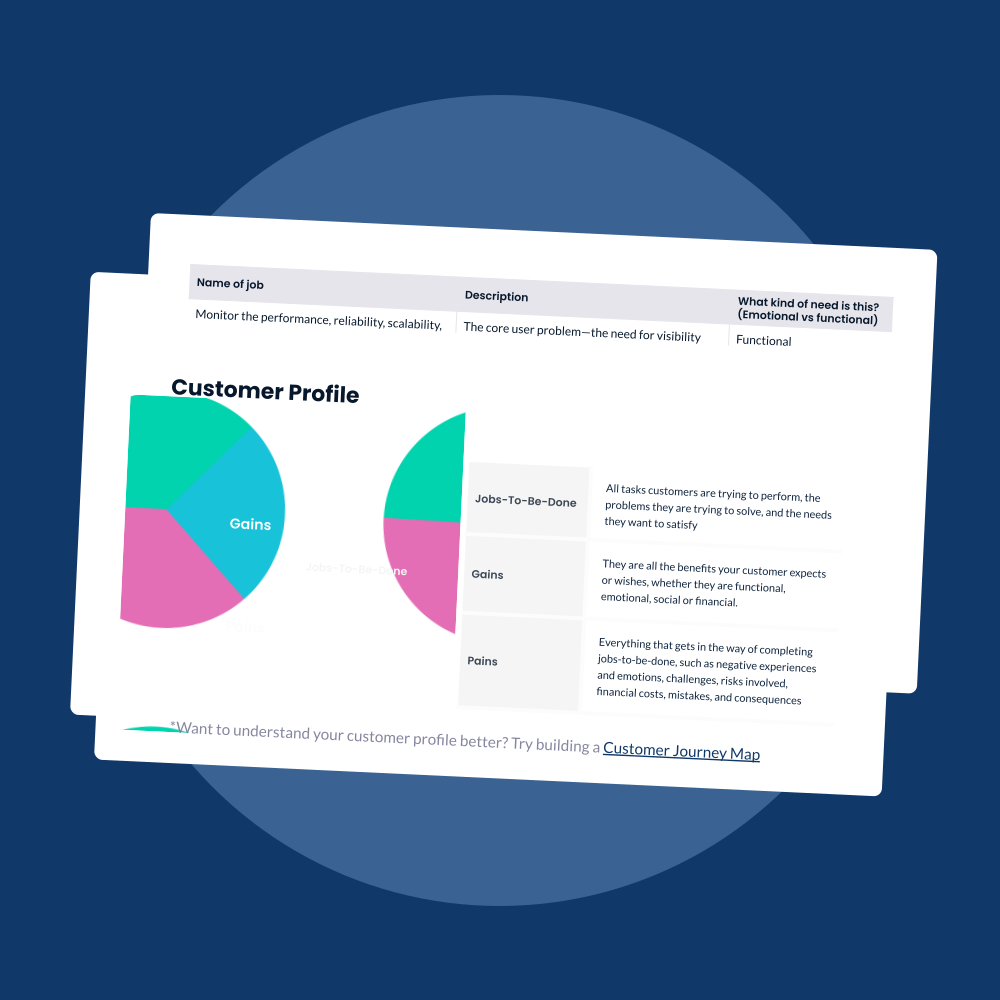
(1): https://www.mckinsey.com/capabilities/growth-marketing-and-sales/solutions/periscope/our-insights/articles/the-customer-insights-function-is-ripe-for-a-boost
Updated: January 26, 2026