The most reliable signals about where product management is heading don’t come from think-pieces. They come from the leaders building the future in real time.
These trends are pulled directly from our recent conversations with ProductCon speakers and Product Podcast guests: the CPOs, founders, and AI forerunners shaping how product teams will operate in 2026.
If you want a clear view of what’s coming and how to stay ahead, here are 11 product management trends to consider leaning into.
Vibe Coding Certification
Go from idea to prototype in minutes. Build, debug, and scale AI prototypes with the latest tools to integrate APIs securely and hand off to engineering fast.
Enroll now
1. Roadmaps Are Out, Product Principles and AI Prototypes Are In
In a fast-moving, AI-driven market, spending months drafting a fixed feature roadmap can backfire.
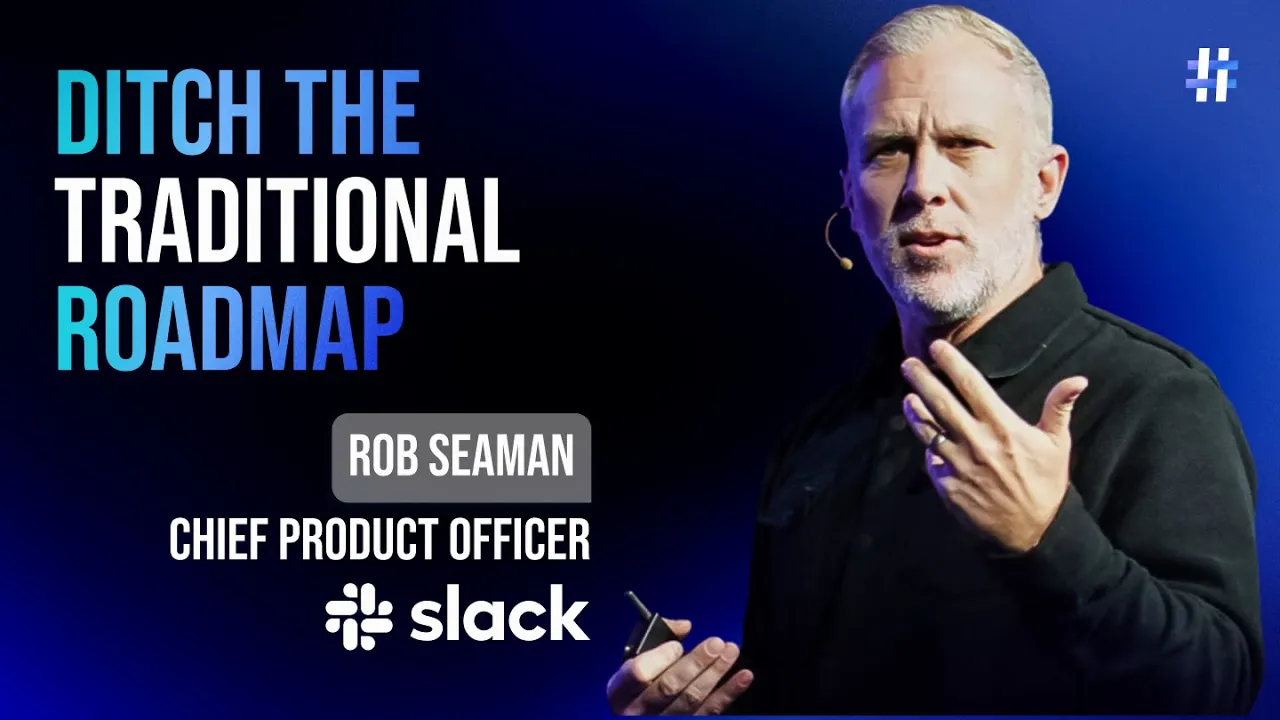
Teams like Slack now focus on product OKRs, clear principles, and speed. Instead of committing to big plans, Slack runs tiny cross-functional squads (even one designer and one engineer) who use AI to prototype constantly, learn quickly, and discard dead ends without hesitation.
As Slack’s CPO Rob Seaman put it at ProductCon:
In this environment, the roadmap is the wrong artifact. Plan for outcomes, prototype the path, and let good product principles scale your decisions.
Product experts echo this. The most effective roadmaps forgo listing out every single item and release date and instead group work by themes tied to clear outcomes, not outputs. In other words, stop obsessing over perfect plans and focus on shared product principles, tiny empowered teams, and rapid user-facing product experiments.
Define a few product principles (user needs, usability, brand, etc.) to guide day-to-day choices and keep everyone aligned.
Keep teams small and agile. Let product designers and engineers ship live prototypes directly to users, learn, and iterate.
Anchor every initiative to measurable outcomes (not just features). Use outcome-based roadmaps and revisit them often.
2. AI Accelerators: Tools and Programs That Speed Up AI Delivery
If your product didn’t start with AI, you can still supercharge it. But only by treating AI as a serious product problem and as a part of AI product strategy.
Instead of slapping on an AI widget and calling it a day, companies are building “AI accelerators”. Quite similar to what we mentioned in the previous trend, these are cross-functional squads (product + design + engineering) dedicated to integrating AI thoughtfully.
They begin by mapping real user pain points to AI strengths (e.g. user onboarding pain ↔ summarization or explanation via LLMs) and run lean pilot projects.
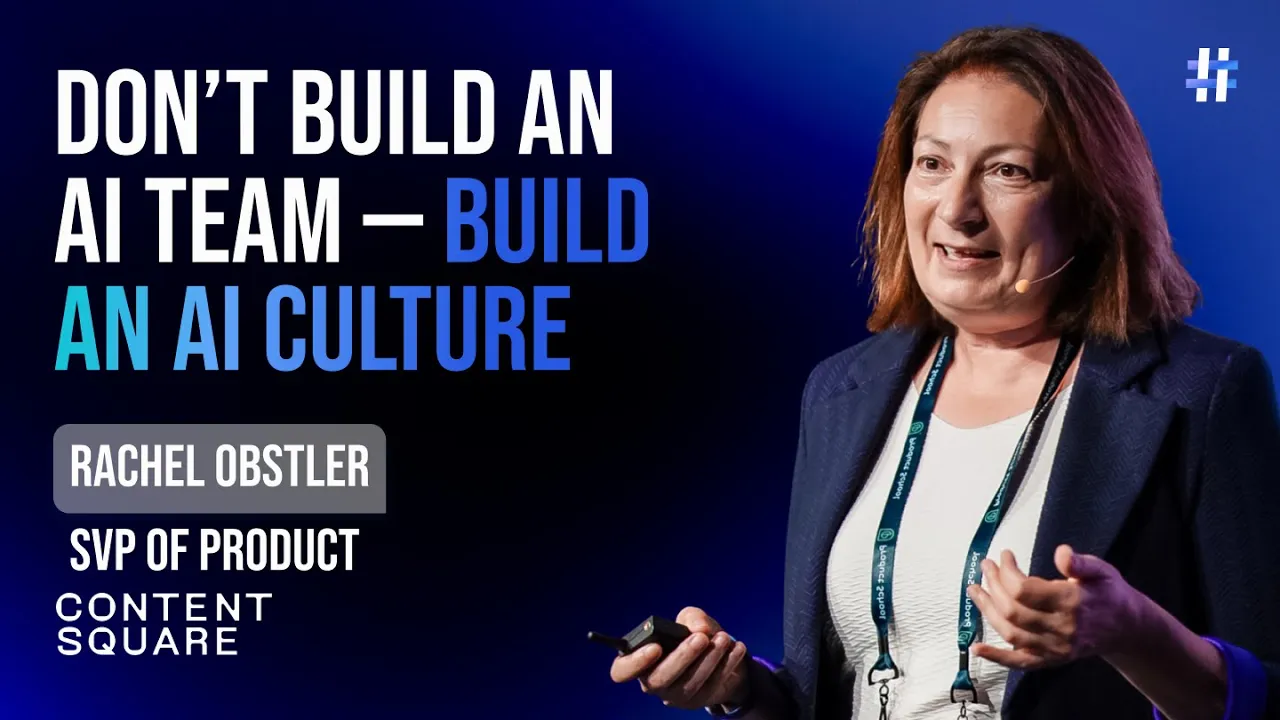
Two rules dominate here. Never be mysterious and always learn. For example, Contentsquare SVP of Product, Rachel Obsler, advises at ProductCon:
Don’t half-ass it and don’t just ‘AI your product.’ Take a little time to define the problems you’re actually trying to solve. Then build AI experiences that are transparent, testable, and easy to keep improving.
In practice that means every AI feature should show its work (explain how it got a result) and include constant feedback loops. UX experts stress that transparency builds trust: systems that “show the reasoning behind” AI suggestions dramatically boost user confidence.
Form cross-functional AI accelerator squads (not a siloed “AI team”) that sit on top of the product and roll AI projects out in iterative stages.
Identify concrete customer problems to solve with AI. Build small AI prototypes, run AI evals, test with users, and refine (rather than launching a big-bang AI feature).
Ensure AI results are always explainable and monitorable. (Give users insight or “provenance” into AI decisions, and collect thumbs-up/down and error metrics to swap in better models quickly.)
3. AI Agent Orchestration Turn Complexity into a Competitive Advantage
Big companies are drowning in complexity, and the new answer is AI orchestration.
By orchestration, Walmart means coordinating multiple specialized AI agents (and humans) across a workflow. So work gets routed, checked, and improved continuously, instead of relying on one ‘big model’ to do everything.
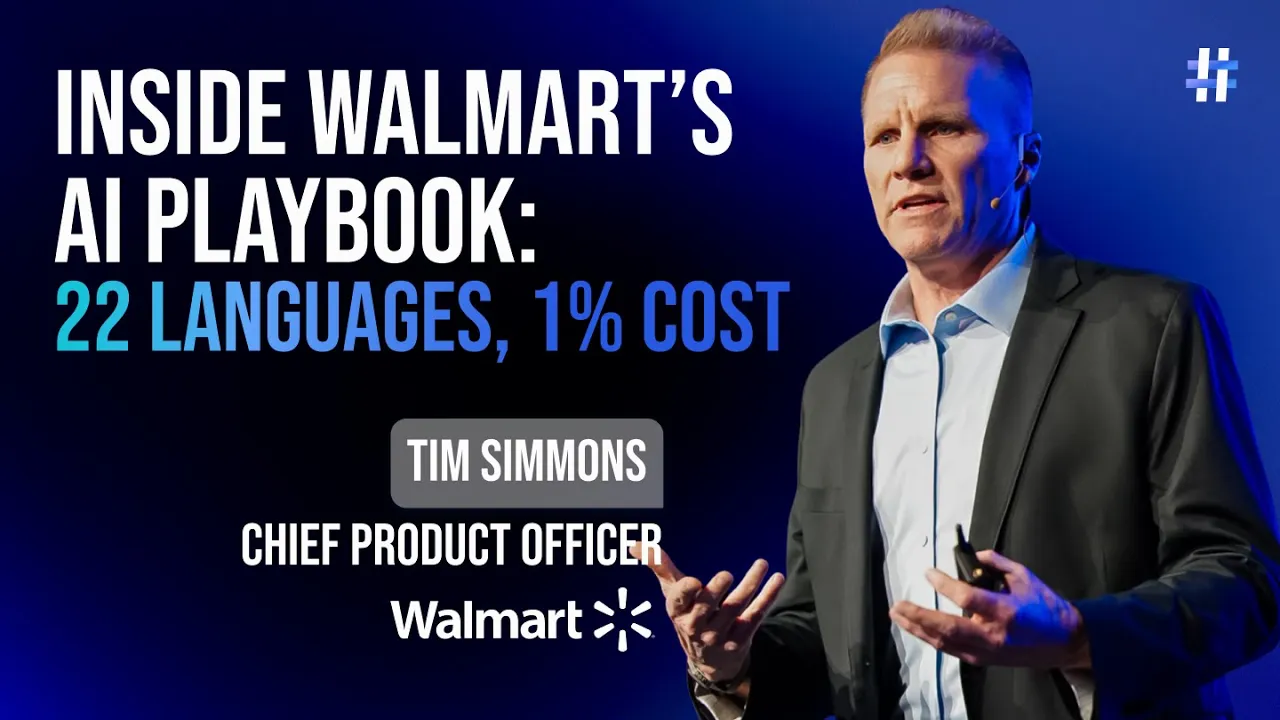
Tim Simmons, CPO of Walmart International, describes a world where teams manage fleets of AI agents, not single models.
One system translates at scale across 22 languages. Another (Telos) cuts certain product work from 30+ weeks to about 8. The more data and feedback these systems see, the better they get.
Human experts define intent and guardrails. Specialized agents do the heavy lifting. An orchestration layer routes work, watches for anomalies, and keeps learning. Product managers are not replaced, but their job shifts to designing workflows and deciding where humans stay in the loop. They become AI product managers.
As Simmons puts it at ProductCon San Francisco:
We need to win because we’re big, not despite the fact that we’re big… when you orchestrate agents well, complexity and scale can actually become a competitive advantage.”
The message for PMs is this: your company’s mess of systems, languages, and markets might be your superpower if you learn to orchestrate it instead of fighting it.
Look for orchestration candidates: flows with many handoffs, copy-paste work, and data already passing through several tools.
Design a “who does what” map for each flow: what humans decide, what agents suggest, and what the orchestrator can auto-approve or escalate.
Measure orchestration, not just usage: track cycle time, error rates, and quality scores before and after you add agents.
4. Design Becomes the Real Moat in an AI-Saturated World
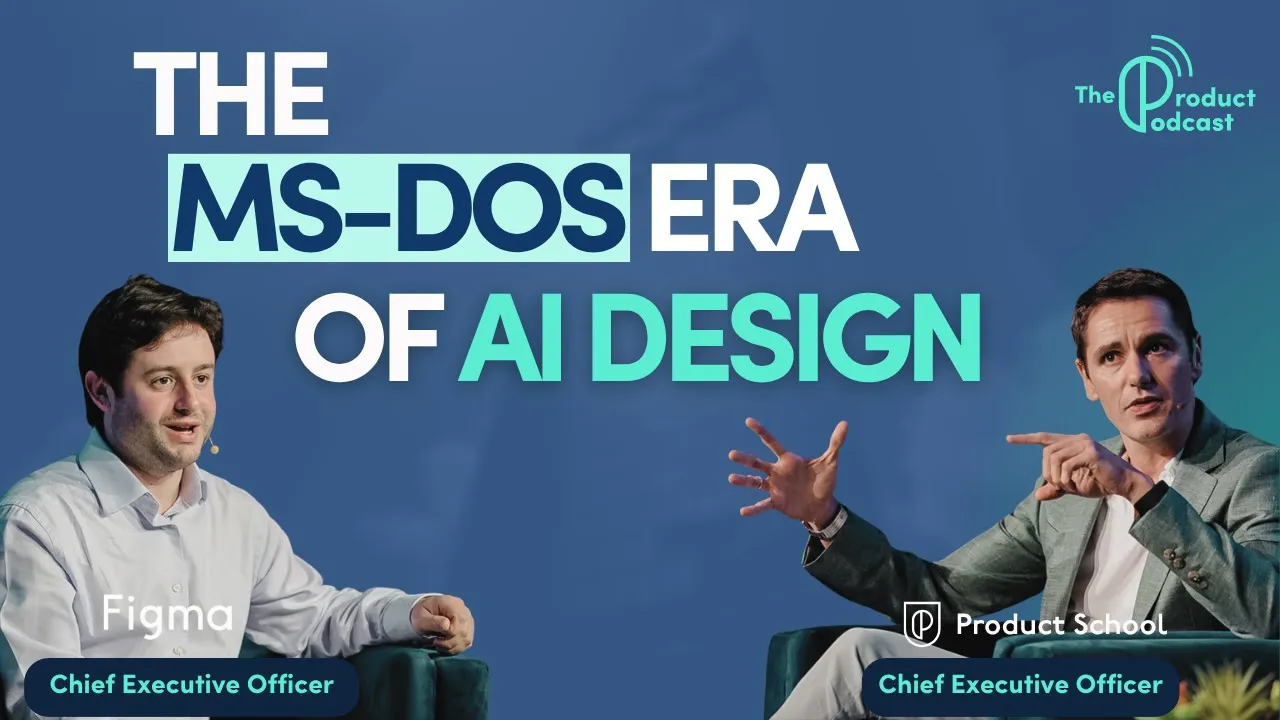
When AI can generate “good enough” UX in seconds, taste and craft become the real advantage. Dylan Field, CEO & Co-founder at Figma, shared in a live recording of The Product Podcast at ProductCon San Francisco how design now sits at the top of the value stack. It is not decoration. It is the system that makes everything hang together.
Nowadays, everyone has access to similar AI tools, models, code, and infrastructure. What most product teams do not have is a strong product point of view, a coherent design system, and the discipline to ship only what feels genuinely good in the hand. That is where the gap opens.
Dylan Field’s bar is high. As he put it:
If you’re not able to internalize all of the design as a system and then articulate it in a way that’s really joyful for the user, I just don’t think you’re going to win.
The work is not just about pixels. It is about how all surfaces connect: app, plugin, canvas, AI assistant, slide, mobile, and website. Users should feel like they are using one brain, not six half-integrated tools.
For product teams, this shifts the PM job too. Now, you are protecting the product’s point of view. You are saying no to clutter, to one-off AI gimmicks, and to flows that feel bolted on. Soon enough, the market will be full of AI-powered tools. The ones that endure will feel opinionated, calm, and surprisingly human.
Treat your design system like core infrastructure: version it, document it, and make sure AI-powered features use the same patterns as the rest of the product.
Bring design into AI decisions early: review prompts, agent behaviors, and failure states as design problems, not just model-tuning problems.
Measure design like you measure performance: track task completion, user effort, and satisfaction for key user flows, and give design leaders real ownership over those numbers.
5. Trust-First AI Becomes the New Baseline
AI is no longer something you “turn on” and see what happens. For enterprise buyers, trust is now the gate. If they don’t believe your product is safe, compliant, and predictable, they will not even get to the “productivity” part of the conversation.
That is exactly the shift Jeetu Patel, CPO at Cisco, is pointing to at ProductCon when he says:
This is the first time that you're seeing that security and safety is not looked at at odds with productivity. It's actually looked at as a prerequisite of productivity.
In other words, if your AI feature creates risk, it destroys value. If it reduces risk, it unlocks value.
For AI PMs, that means you can’t outsource security thinking to “the security team.” You have to understand the data flows, the failure modes, and the guardrails well enough to design around them. In practice, trust-first AI changes the PM job in three ways.
First, you treat safety and governance as part of the experience, not a legal checkbox. Second, you assume your AI will be audited by buyers, regulators, and internal stakeholders, so you design for explainability and control. Third, you accept that trust is dynamic. It is earned and re-earned with every new model, feature, and integration.
The teams that internalize this will ship fewer “shiny” features, but their AI will actually get adopted at scale.
Add trust requirements to every spec: for each AI feature, define data boundaries, retention rules, escalation paths, and what “safe failure” looks like before you talk UI.
Give users real control surfaces: let admins decide where data is stored, which models can be used, what content is allowed, and how long logs are kept, and expose those controls in clear language.
Build a trust feedback loop: track safety incidents, near misses, and user complaints about AI behavior, run structured postmortems, and feed those insights into your AI evals, safeguards, and product backlog.

6. Outcome-Based Accountability Replaces a “Feature-Shipping” Culture
In product management today, success is measured by impact, not product launches. High-performing teams tie promotions and decision-making to long-term outcomes, not just outputs.
As Lisa Kamm (Dow Jones product leader, formerly Google) observed at ProductCon:
If you only promote people for launches, you’re going to get so many launches, but they’re not necessarily what you should be launching. Google stopped talking about launches and started talking about landings. Are you landing features? Did it have outcomes?
In practice, this means teams stop treating release dates as finish lines. A launch is just the start of an adoption and behavior-change curve you are accountable for. Product, engineering, and design define success up front, instrument the experience properly, and keep coming back to the same bets months later to see if they are still earning their place in the product. Feature velocity becomes an input, not the headline.
The real signal is whether your roadmap is getting pruned, doubled down on, or completely rewritten based on what you are learning in the wild.
Redesign performance reviews so people write an impact narrative over 6–12 months (what changed for users, what they learned, what they killed), not a list of shipped tickets.
Make “landing reviews” a standard ritual a few months after launch, where cross-functional teams look at adoption, behavior, and business impact, then decide whether to iterate, scale, or retire the feature.
Build shared dashboards that mix product, commercial, and customer metrics, so PMs, engineers, designers, and even GTM teams are staring at the same outcomes every week and adjusting decisions in real time.
7. Speed of Learning Becomes the Real Product Moat
In 2026, your learning speed is your moat. In this stage in our technological progress, where AI lets anyone clone product experience, workflows, and even messaging in weeks, the real advantage is how quickly your org notices what’s changing, updates its beliefs, and ships a different answer.
Miro’s founder and CEO, Andrey Khusid, said at ProductCon:
I think the number one competitive mode that every company has is the speed of learning. It’s how fast you recognize a signal, separate that from the noise, and act on that signal. And the faster you can do it, the more probability of being successful long term you have.
The strongest product-led organizations treat learning as an operating system, not a side activity. They bake it into rituals, tooling, and incentives. Roadmaps are hypotheses. Product experiments are cheap and constant.
And it’s normal for a team to kill a project after two weeks of strong negative signal instead of dragging it through three quarters “because we committed.” Speed here is not chaos. It is disciplined curiosity backed by data, user insight, and the courage to change course fast.
Turn your product roadmap into a portfolio of explicit bets, each with a clear hypothesis, timebox, and “kill or double-down” trigger so teams know when to walk away.
Create a single learning backlog where insights from user research, sales, support, and product analytics are logged, themed, and regularly pulled into planning instead of living in disconnected tools.
Add learning-focused questions to every review: what did we change our mind about, which belief turned out wrong, and how will that shape the next iteration of the product.

8. Product Teams Need “AI-Speed” Release Infrastructure
When your models, APIs, and AI agents change weekly (or daily), a quarterly release train is basically a bottleneck.
Vercel’s VP of Product, Aparna Sinha, describes it perfectly on the ProductCon:
Building in AI is like building in an earthquake… the best model changes at any time, sometimes multiple times a day. What this means for us is that your release infrastructure has to be flexible so that you can try out new technology and see what works best for your product.
In practice, that means treating CI/CD, feature flags, rollbacks, and AI evaluation harnesses as critical product surfaces, not just backend plumbing. If it takes you a month to test a new model, you’re already behind.
For AI-powered PMs, this is now part of the job. You don’t need to architect Kubernetes, but you do need to understand how models move from sandbox to staging to production, which safeguards exist, and how quickly you can reverse a bad call.
“AI-speed” infra lets you swap models, tune prompts, gate features by segment, and roll back safely without a full release cycle. Without it, AI product strategy turns into slideware.
Design a clear “model change playbook” that defines when you adopt a new model, how you A/B test it against the old one, and who signs off on rollout and rollback.
Introduce AI-specific release metrics, such as time to evaluate a new model, percentage of traffic behind flags, and time-to-rollback when guardrails trigger or quality drops.
Give platform and infrastructure squads real product ownership with PMs dedicated to experimentation tooling, AI eval workflows, and safety systems so feature teams can move fast without breaking trust.
9. AI-First Product Orgs Will Replace “AI Tool Adoption” as the Real Edge
By 2030, the real advantage won’t come from having the longest list of AI apps in your stack. It will come from whether your product organization itself is AI-first.
As I said in my own ProductCon talk in San Francisco:
Real transformation comes from orchestrating people, tools and processes into a new operating system. The first goal is to become AI-first. AI-first means defaulting to AI as the first response to solve problems and build products.
In other words, AI becomes the default way product teams explore ideas, run experiments, shape product strategy, and make day-to-day decisions. That shift only happens when executives and PMs are advanced AI users themselves, workflows and org design are rebuilt around humans plus AI agents and RAG systems, and AI outcomes are reviewed with the same seriousness as revenue, retention, and NPS.
AI-first here starts looking like an operating system that runs the whole product organization.
Run a few “AI-first product cycles” where every major decision, spec, and experiment must use AI at least once, then compare quality, speed, and team sentiment against your old way of working.
Redesign core rituals like roadmap reviews and postmortems to include a dedicated AI lens: how did AI change the work, what broke, and which manual steps can be removed next time.
Create an internal AI playbook that documents your best AI patterns, workflows, and guardrails so new teams can plug into an existing operating model instead of inventing their own from scratch.
10. Every PM Is a Growth PM — Distribution Is Everything
If nobody discovers your new, flashy AI feature, it may as well not exist. That is why Noam Lovinsky (CPO, Grammarly × Coda) is direct about the new baseline:
Every PM is a growth PM. Every PM should be thinking about the GTM strategy from day one. Having a great feature idea but no idea how anyone discovers it (or why they’d pay for it) just doesn’t have much value.
Distribution strategy is part of the product surface here. Elena Verna, Head of Growth at Lovable, pushes this even further at ProductCon:
Distribution is everything…You need a growth model that’s sustainable and predictable, and the way to get there is to build a moat around your product.
The implication for PMs is clear. You own both the feature and its path to market. That means treating activation, AI monetization, and expansion like first-class product problems. In a setting where AI makes it easy to copy your UI and feature set, a durable advantage comes from the growth system wrapped around the product.
Treat every major feature as a mini business: define its target segment, promise, route to market, and success metrics before you greenlight serious build work.
Make distribution part of the product’s UX: design joins, invites, sharing flows, and collaboration hooks as carefully as you design core functionality.
Tie PM performance to growth outcomes: activation, user retention, expansion, and payback period should sit next to NPS and engagement in how you evaluate product success.

11. Product Roles Are Blurring, Overlap Is the New Norm
The organizational chart might still show neat boxes, but the work definitely doesn’t. As AI spreads through everything, the lines between product, engineering, design, sales, and marketing are getting blurry fast.
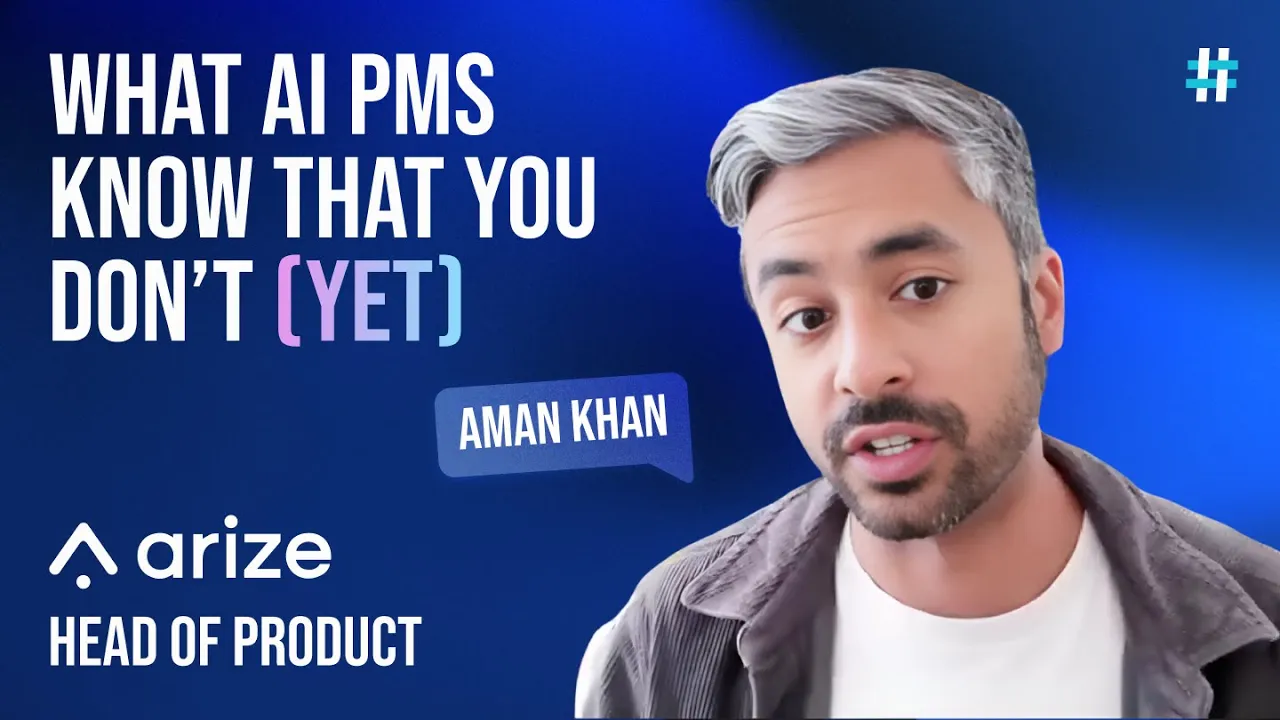
Aman Khan, Director of Product at Arize AI, put it simply on the Product Podcast:
First, I think we’re all feeling this: the PM role is changing. Expectations on us and our teams have really leveled up in this new world where AI permeates both how we use technology and how we build it. Functions that used to be discrete like product, engineering, design, even sales and marketing are now overlapping more and more.
The old “throw it over the wall” model is dead. Modern product teams feel more like overlapping Venn diagrams than hand-offs on a relay track.
PMs are expected to speak design, understand data deeply, know how the model works at a high level, and have a credible view on distribution and pricing. Designers are expected to understand constraints and metrics. Engineers are much closer to discovery and customer conversations. In 2026, this overlap is not a bug. It is the operating model.
And it’s already changing team composition. Andrew Ng, the founder of Deep Learning AI, has shared that as engineering output accelerates, teams are switching old ratios, from roughly 1 PM per 4 engineers to the equivalent of 2 PMs per 1 engineer.
The teams that win will be the ones that lean into this blur, not fight it with rigid role policing and ownership wars.
Redesign team rituals so overlap is built in: shared discovery, joint spec-writing, and reviews where product, design, and engineering critique the work together instead of in separate lanes.
Update role expectations and hiring profiles to reflect reality: PMs who can talk GTM, designers who are comfortable with data, and engineers who can join customer calls without a script.
Build shared scorecards across functions so everyone is accountable for the same outcomes, not “my part of the funnel,” which reduces the classic “that’s not my job” friction.
Product Management Trends: Where You Go From Here
If there’s one thread running through all these product management trends, it’s this: The teams that win in 2026 will treat AI, design, and experimentation as their default way of working.
Your job is no longer to maintain a roadmap and ship features. Your job is to build a learning machine around customers, data, agents, and to keep that machine honest, human, and fast.
If you want to see what this looks like in practice, watch one of the ProductCon speeches first. Then ask a simple question: What would it look like if my team truly operated this way for the next 12 months?
Advanced AI Agents Certification
Design and implement adaptive, multi-agent AI systems with memory, collaboration, and risk safeguards. Deploy production-ready AI agents at scale.
Enroll now
Updated: January 12, 2026